
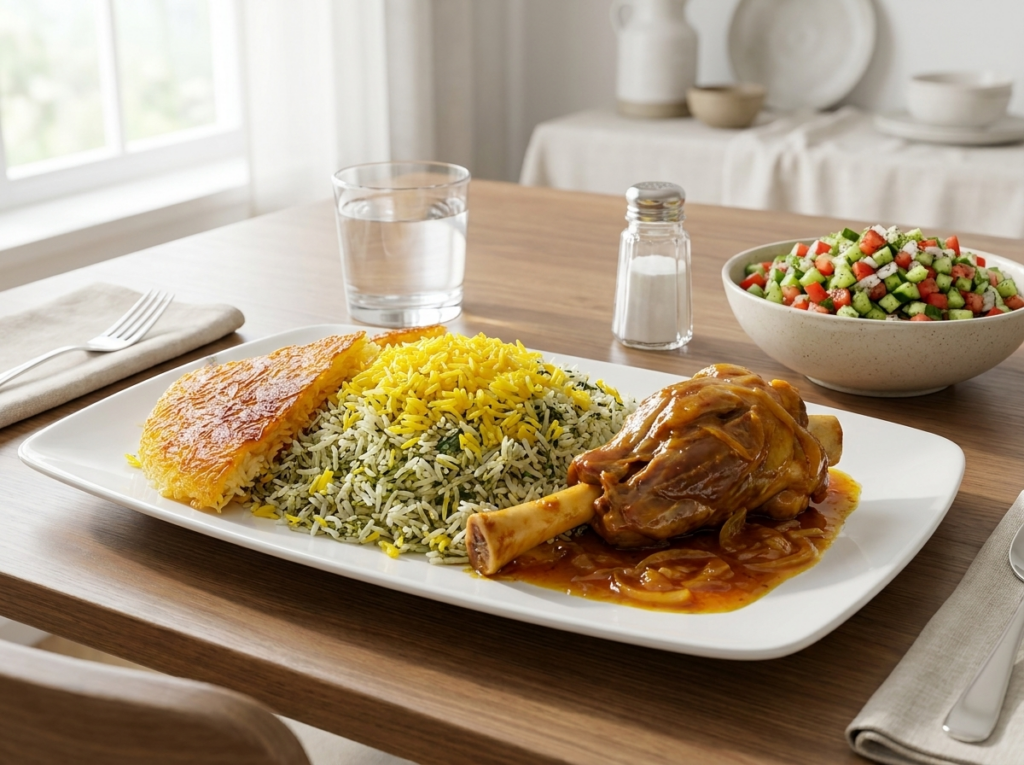
how to cook Sabzi Polo ba Mahicheh (Dill rice with lamb shank)

What Is Sabzi Polo ba Mahicheh?
Sabzi Polo ba Mahicheh is one of the most elegant and comforting dishes in Iranian cuisine. It is made with fragrant rice, fresh herbs used for sabzi polo, and lamb shank, resulting in a flavorful, nourishing, and very satisfying meal. Sabzi Polo ba Mahicheh is usually served on special occasions, at family gatherings, and at formal dinners, as it represents patience, hospitality, and traditional Iranian cooking methods.
Sabzi polo is a type of mixed rice cooked with fresh herbs such as dill, parsley, cilantro, and chives. Mahicheh is usually made with lamb shank, which is cooked slowly over low heat until it becomes completely tender, juicy, and full of flavor. Together, they create a complete and balanced dish: the freshness and aroma of the herbs complement the rich, savory taste of the meat.
Cultural Significance of Sabzi Polo ba Mahicheh
In Iranian culture, sabzi polo is often associated with celebrations and important occasions. It is especially served with fish during Nowruz, the Persian New Year. However, pairing it with lamb shank turns it into a more luxurious, nourishing, and impressive dish for entertaining guests. For this reason, Sabzi Polo ba Mahicheh is often prepared for formal gatherings and special meals.
Ingredients for Sabzi Polo ba Mahicheh (Serves 4)
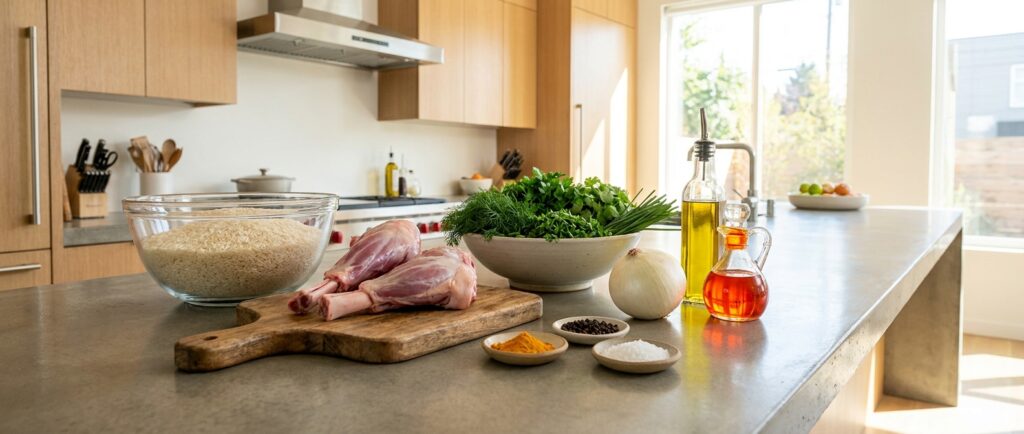
- 450 g Iranian rice, uncooked, about 3 cups
- 800 g lamb shank
- 300 g mixed fresh herbs, including dill, parsley, cilantro, and chives
- 1 large onion, about 200 g
- 3 tablespoons cooking oil, about 40 g
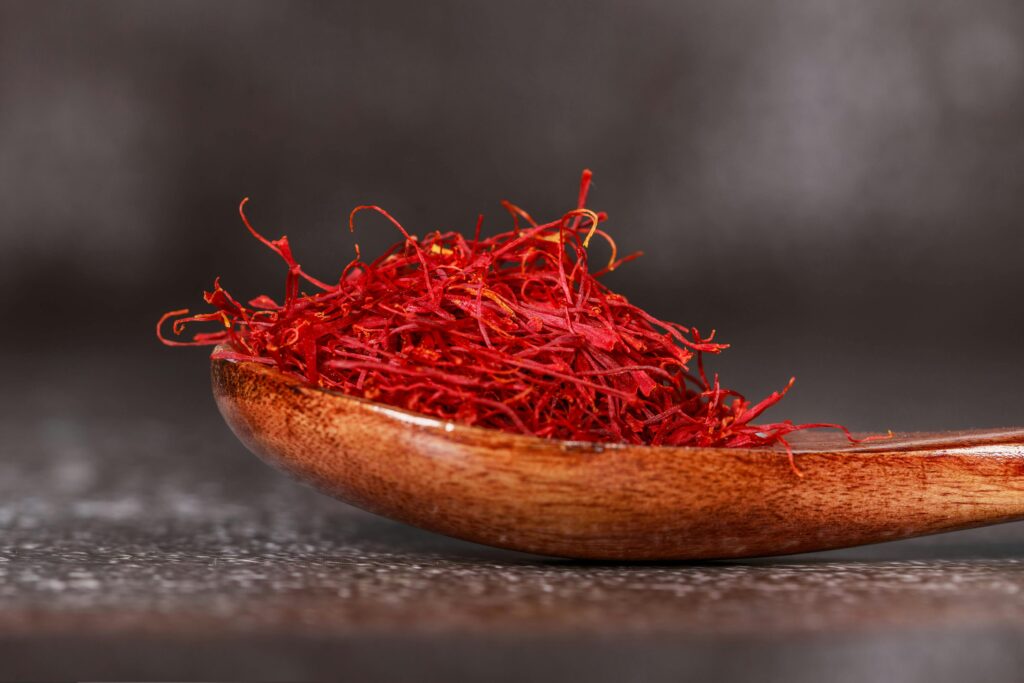
- 2 g saffron, bloomed in hot water
- 1 teaspoon ground turmeric
- 1/2 teaspoon black pepper
- Salt, to taste
How to Cook the Lamb Shank
The secret to perfectly cooked lamb shank is low heat and patience. First, finely chop the onion and sauté it with a little oil until golden and fragrant. This step creates the main flavor base of the dish. Then add the lamb shank and let it brown gently on all sides over moderate heat. Light browning helps improve the flavor of the meat and also gives the final dish a more appealing appearance.
Once the meat is lightly browned, add the turmeric and black pepper, and sauté briefly until the spices release their aroma. Then pour enough boiling water into the pot to almost cover the meat. Reduce the heat, leave the lid slightly ajar, and let the meat simmer gently for about 2.5 to 3.5 hours. This long, slow cooking process gradually softens the connective tissues in the meat, giving the lamb shank a tender and juicy texture.
You can add the salt either at the beginning of cooking or toward the end. Contrary to common belief, salt does not necessarily make meat tough, and many chefs add it from the start. Therefore, the timing mostly depends on your cooking habits and preference, and it does not make a significant difference to the final tenderness of the lamb shank.
In the final minutes of cooking, add the bloomed saffron so the sauce develops its signature aroma and golden color. The final lamb shank sauce should be rich, glossy, and full of flavor.
How to Make Sabzi Polo
Wash the rice and soak it in salted water for at least one hour so the grains cook more evenly and lengthen better. Then bring a large pot of water to a boil, add the rice, and cook it until the grains are soft on the outside but still slightly firm in the center. After that, drain the rice completely.
Wash the herbs, dry them well, and finely chop them. Too much moisture in the herbs can make the rice mushy, so drying them thoroughly is very important. Gently mix the chopped herbs with the parboiled rice, or layer the rice and herbs alternately in the pot.
Next, pour a few tablespoons of oil and about half a small glass of water, or a mixture of water and oil, over the rice. Cover the pot and let the rice steam over low heat for about 45 to 60 minutes. In the end, you should have fluffy, separate, aromatic, green-tinted rice with the herbs evenly distributed throughout.
Tips for Restaurant-Quality Results
Cooking lamb shank too quickly over high heat will make the meat dry and tough, so slow cooking is essential. For sabzi polo, the most important point is draining the rice at the right time. If the rice is overcooked, it will become mushy while steaming; if it is drained too early, the center may remain undercooked. It is also best to add saffron near the end of cooking the lamb shank so its aroma is better preserved.
Nutritional Value of Sabzi Polo ba Mahicheh
Sabzi Polo ba Mahicheh is an energy-rich dish packed with nutrients. Rice is the main source of carbohydrates and energy in this meal, lamb shank provides protein and iron, and fresh herbs add fiber, vitamins, and antioxidants. Although this dish is high in calories, it is nutritionally complete and very filling.
Nutritional Information, Total for 4 Servings
| Ingredient | Amount (g) | Calories (kcal) | Carbohydrates (g) | Protein (g) | Fat (g) |
|---|---|---|---|---|---|
| White rice (uncooked) | 450 | 1665 | 365 | 32 | 3 |
| Fresh herbs | 300 | 90 | 15 | 6 | 1 |
| Lamb shank | 800 | 1760 | 0 | 160 | 120 |
| Onion | 200 | 80 | 18 | 2 | 0 |
| Cooking oil | 40 | 360 | 0 | 0 | 40 |
| Saffron | 2 | 6 | 1 | 0 | 0 |
| Spices & salt | — | ~0 | 0 | 0 | 0 |
| Total (entire dish) | — | 3961 | 399 | 200 | 164 |
Based on these estimates, the total calorie content of Sabzi Polo ba Mahicheh for four people is about 3,960 kilocalories. If divided equally into four servings, each serving provides around 990 kilocalories. In terms of macronutrients, each serving contains approximately 100 grams of carbohydrates, about 50 grams of protein, and around 41 grams of fat.
Although the herbs add only a small number of calories, they are nutritionally important because they provide dietary fiber, vitamins, and essential micronutrients, helping balance this rich and hearty dish.
Note: The values above are approximate and may vary depending on the ingredients used, the fat content of the meat, and the amount of oil added.
Is Sabzi Polo ba Mahicheh a Healthy Choice?
Although Sabzi Polo ba Mahicheh is a rich and high-calorie dish, it can still be considered nutritionally complete. By reducing the amount of oil or trimming excess fat from the meat, it can fit more easily into a balanced diet. The fresh herbs also add aroma, freshness, fiber, and valuable micronutrients to the dish.



 English
Responses