

Why Are Europeans Thinking About Moving Abroad More Than Ever?

In today’s world, migration is no longer just a response to crisis, war, or unemployment. For many people in Europe, living in another country has become a real, imaginable, and even attractive option. It is a choice that may be driven by reasons such as a better quality of life, a brighter career future, more freedom, and the chance to experience a different way of living. Recent data highlighted in a report shows that only a small percentage of Europeans say they have no interest in living outside their own country. This suggests that attitudes toward migration in Europe have entered a new phase.
This change is not just a shift in statistics. It reflects a deeper transformation in the social, economic, and even cultural mindset of a new generation of Europeans. For many people across the continent, the place where they were born is no longer automatically the place where they must build their future, career, family, and lifestyle. What matters more today is the power of choice: the choice to live in a better city, work in a more suitable country, or be part of a society where they feel more secure, satisfied, and able to grow.
Migration Is No Longer a Taboo; It Is a Modern Choice for a Better Life
Just a few decades ago, migration was seen by many Europeans as a major and often stressful decision. Leaving one’s country meant moving away from family, one’s native language, familiar surroundings, and stepping into an unknown life. But this view has changed significantly in recent years. New generations, especially younger people, see migration not only as a major break, but also as a natural part of their personal and professional journey.
One of the main reasons for this change is the growth of global communication. Today, people know much more than before about life in other countries. Social media, international news, the personal experiences of friends and relatives, and easier access to information about jobs, education, and residence abroad have made life outside national borders feel less distant and unclear. For younger generations, migration has changed from an exceptional decision into a real and manageable life plan.
At the same time, the relative ease of movement in some parts of Europe has also helped make migration feel more normal. When mental and administrative borders become less strict, people can more easily imagine themselves living in another country. In this context, living abroad is no longer only a decision made out of necessity. It can also be part of a modern lifestyle—one in which experience, flexibility, and freedom of choice are highly valued.

What Is Encouraging Europeans to Live Abroad?
Although economic issues are still among the main reasons people move abroad, the truth is that today’s motivations go far beyond simply finding a job or earning more money. Quality of life has become one of the most important factors in decision-making, and sometimes it matters even more than salary.
For many people, a better life means access to suitable housing, a healthy work-life balance, reliable healthcare, efficient public transport, social security, a calmer urban environment, and a more open cultural atmosphere. At a time when living costs have risen sharply in some European countries and economic pressure on the middle class and younger generations has increased, it is natural for people to think about other options—places where they might enjoy greater satisfaction with less pressure.
Young people play a particularly important role in this trend. Many young Europeans do not see their personal and professional future as limited to just one country. They see mobility as something natural for education, internships, international experience, or starting a career. In fact, for this group, migration is not always a final life decision; it is often part of a broader path of growth and discovering better opportunities.
At the same time, changes in the job market have strengthened this trend. The rise of remote work and new forms of employment has reduced the importance of being physically tied to a workplace. Many professionals can now live in a country that offers a better quality of life without necessarily losing their jobs or depending entirely on the traditional job market of that country. This shift has changed the very meaning of migration and made it more possible and attractive for a wider range of people.
What Does This Strong Interest in Migration Say About Europe’s Future?
When a large majority of citizens in a continent do not rule out the possibility of living in another country, this is not just a personal preference. It is a sign of deeper changes in the social and economic structure of that continent. Europe today is facing a generation that is more dynamic, more fluid, and less tied to traditional borders. For this generation, national identity still matters, but it is no longer the only factor that determines where they choose to live.
This reality may also increase competition between countries. In a world where skilled, educated, and flexible people have more freedom to move, countries must offer better conditions if they want to attract and keep residents. The quality of education, job opportunities, housing policies, public services, social security, and general welfare all become key factors in this competition. Any country that performs poorly in these areas may lose part of its active and future-building population.
From a cultural point of view, this trend may also lead to more layered and diverse societies across Europe. Increased mobility does not only affect the labor market; it also influences language, urban culture, social relationships, and even consumer habits. European cities are likely to become even more multicultural spaces—places where belonging is shaped less by nationality alone and more by shared experiences of living, working, and participating in society.
At the same time, a high desire to migrate does not always mean freedom of choice alone. In some cases, it can also reflect hidden dissatisfaction—from rising living costs and difficulty accessing housing to job insecurity and declining hope for the future. For this reason, the growing interest in living abroad also sends a clear message to governments and policymakers: if they fail to create more satisfying conditions for citizens, the desire to leave may grow even in stable societies.
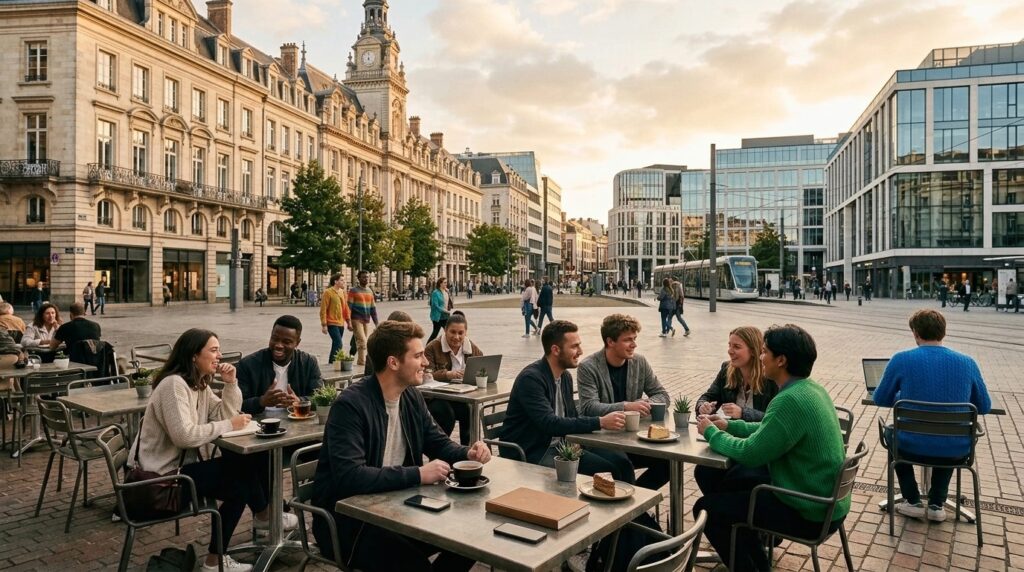
Migration in Europe Has Moved From Exception to Part of Modern Life
What we can understand from this change in attitude is not only a growing interest in mobility, but also a redefinition of success and satisfaction in life. For many people, success is no longer limited to staying in one place and building a future within a traditional framework. Today, success means having the freedom to choose where to live better, grow more, and feel greater peace and satisfaction.
In this environment, migration is no longer just an economic or emergency decision. For some Europeans, it has become part of a lifestyle—a lifestyle in which mobility, flexibility, openness to experience, and the search for a better quality of life hold real value. This shift in mindset helps explain why living abroad is no longer seen by many as something frightening, but rather as a serious and attractive possibility.
In the end, Europeans’ growing interest in migration reflects a world in which borders, at least in people’s minds, are less limiting than before. More than ever, people want to decide for themselves where to live, how to work, and in what kind of environment to build their future. This means that migration, for a large part of European society, is no longer an exception. It has become one of the most normal and important life options in the modern age.




 English
Responses